

As a teenager, I had the great fortune to spend many long hours in the company of a number of wise old Sioux medicine men. John Fire Lame Deer, Pete Catches, Wallace Black Elk, Henry Crow dog and others were regular visitors at my parents’ apartment in New York City. Often I accompanied my father, Richard, on his trips to the reservation and helped with his cameras and recording equipment. On many occasions I was recruited to act as sound-man when Richard had interviews to conduct. I was deeply impressed by the reverence the elders held towards the earth and its “power”.
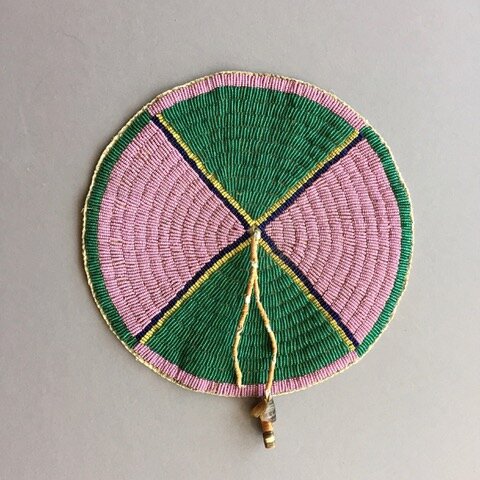
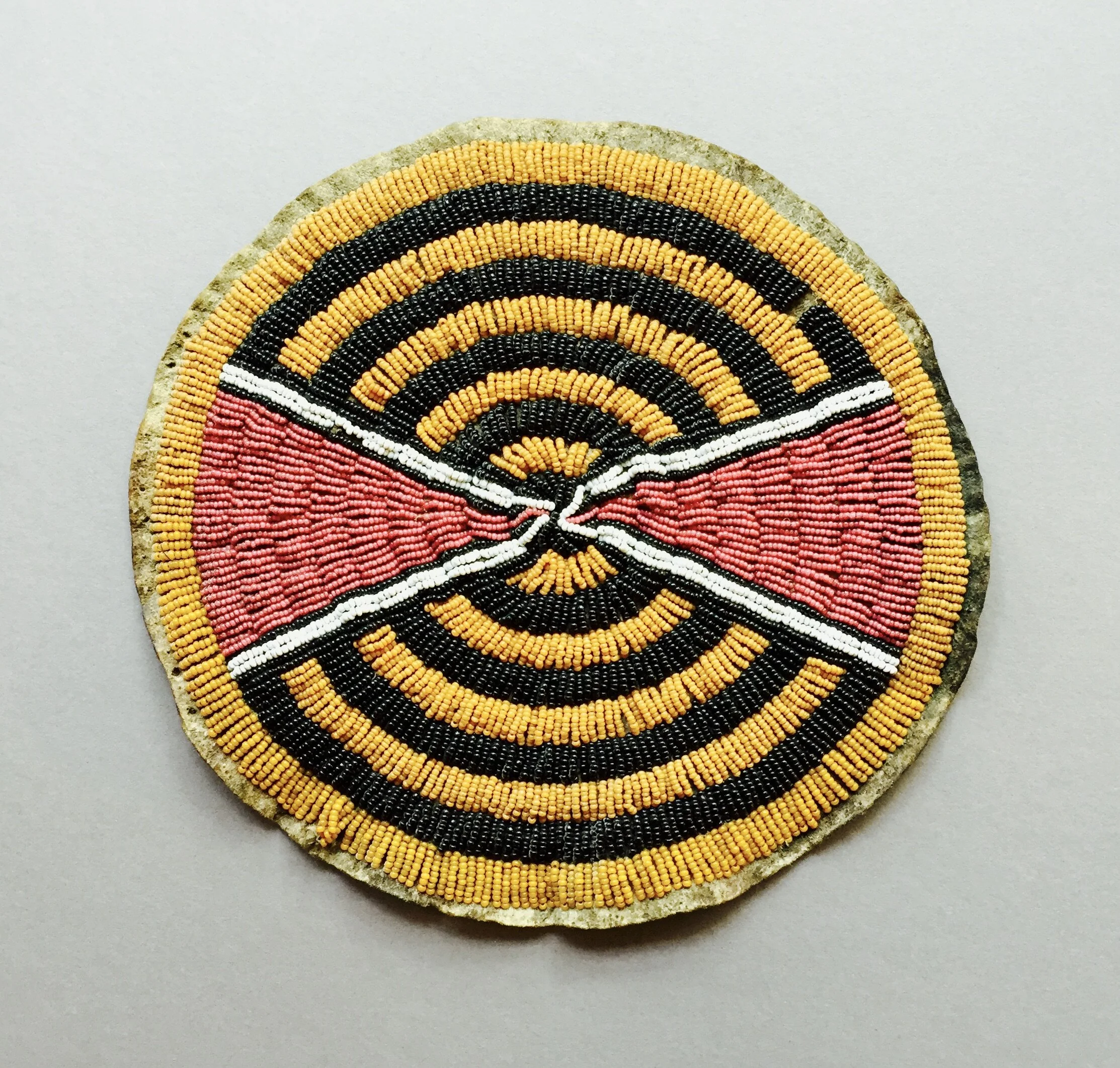
The Great Spirit to which the Plains Indian prays does not dwell high above in the heavens. Rather, he lives in all things: in the trees, in the rocks, in animals, in the planets. The Great Spirit is, in essence, everything. An individual is as much a part of the Great Spirit as are the sun, the moon and the stars. When a Sioux, Cheyenne or Arapaho prays, he prays to the four directions: the north, the south, the east and the west, because the great spirit resides in all these places. All things are intertwined in a complex weave of never ending cycles. All that transpires, all that exists, are part of the Great Circle of Life. The importance of the circle as a symbol in Plains Indian culture cannot be overstated. To the Indian of the Plains, the circle represents the power, the holiness of the universe, as well as its balance and harmony. Among the Cheyenne and Arapaho, the very act of creating beaded or quilled discs, or rosettes, was considered sacred. The circle is believed to bring forth life, to protect life. It is, in fact, life itself. Black Elk told John G. Neihardt in 1932: “…the Power of the world always works in circles and everything tries to be round. The sky is round, and I have heard that the Earth is round like a ball, and so are all the stars. The wind, in its greatest power whirls. Birds make their nests in circles, because theirs is the same religion as ours. The sun comes forth and goes down again in a circle. The moon does the same, and both are round. Even the seasons form a great circle in their changing, and always come back again to where they were. The life of a man is a circle from childhood to childhood, and so it is in everything where power moves.”
Indian women adorned their family’s most treasured possessions with representations of the sacred circle worked in beads or dyed porcupine quills. The tipi was customarily decorated with four circular rosettes, one for each of the cardinal directions. A fifth, larger rosette was usually placed at the top rear of the tipi. An individual was similarly surrounded by circles when wearing a blanket or robe decorated with a beaded or quilled blanket strip. A warrior’s shirt, meant to protect him from harm in battle, commonly had quilled or beaded rosettes sewn directly over the chest and back. His shield was, of course, circular in design. Among the Arapaho, a child’s cradle was decorated with a rosette over the head, usually of porcupine quillwork, intended to impart long life and health to the infant. Arapaho women undertook the art of quillworking with particular reverence. A quillworker had to be an approved member of a quillworking guild before her work would be accepted by the tribe.
Beaded and quilled rosettes were greatly valued by all Plains tribes. When a tipi, cradle or other article decorated with the sacred circle had outlived its usefullness, the rosettes were carefully removed and saved for later use. During the reservation period, when the tipi was gradually being replaced by more permanent dwellings, many circular tipi ornaments were recycled into beaded bags. Quilled cradle rosettes, too, often found new life as round bags, frequently incorporating other parts of the cradle in their design. Living with these rosettes, and studying them, has helped to deepen my understanding of nineteenth century Plains Indian culture. Perhaps more importantly, they have served as a reminder to always “try to be round ”.
Erich Erdoes
July, 2020


